
AI for Parents
If you’ve picked up The AI Teaching Revolution, you already know where I stand: AI isn’t going away, and the people who shape how it’s used in learning matter enormously. Teachers. School leaders. People who care enough to get informed rather than just react.
But here’s what kept coming up in conversations after that book landed.
Parents.
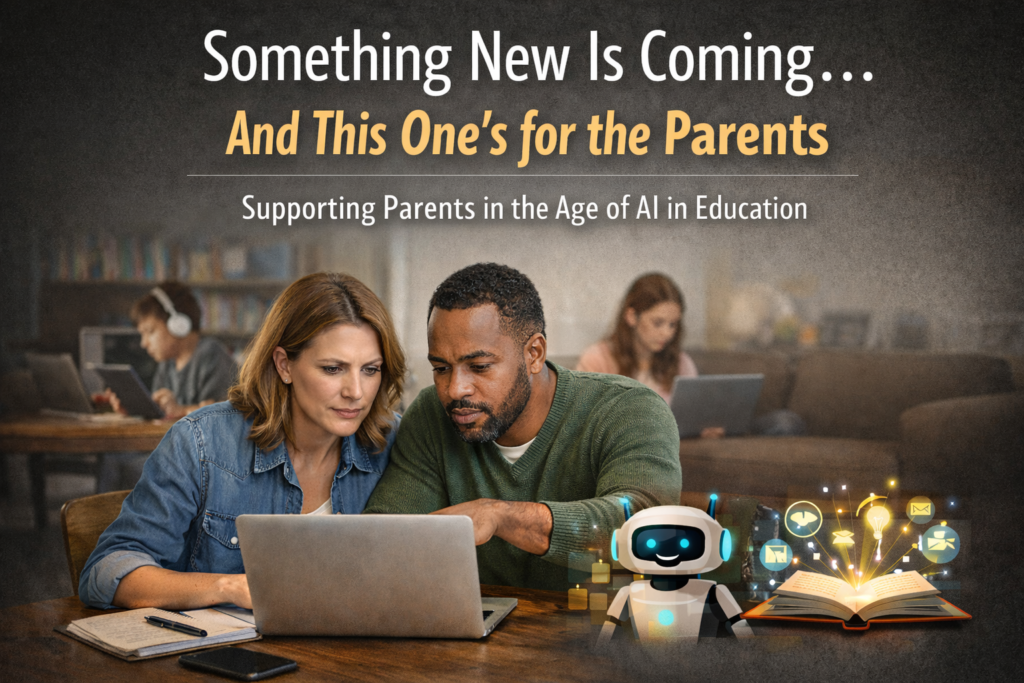
Not teachers asking about curriculum. Parents asking at the school gate, in my inbox, during networking events, and at presentations. Moms and dads who were watching their teenagers disappear into laptops at 10pm, unsure whether what was happening was learning or something else entirely. Parents who felt locked out of a conversation that was happening without them.
So I started writing for them.
What the New Book Is About
The working title is The AI Parenting Revolution. It’s a practical, honest guide for parents of secondary school teens who want to understand what AI means for their kid’s education, and what they can do about it tonight, not someday.
The research behind it is pretty eye-opening. More than half of high school students are regularly using AI tools for schoolwork. And close to 70% of parents surveyed say they’re worried those tools are being used to cheat on homework, quietly, without anyone noticing.
That fear is real. It makes sense. But fear without a roadmap just leads to arguments, bans that don’t stick, and teenagers who learn to hide things better.
This book is the roadmap.
What You’ll Get From It
I wrote this for the parent who isn’t a tech person. The one who doesn’t want a lecture on large language models but does want to know how to have a conversation with their 15-year-old that doesn’t end in a slammed door.
Here’s some of what’s inside:
The myths vs. the reality. Why blanket bans on AI usually backfire, and what works instead. There’s a big difference between helpful use and harmful dependence, and this book helps you see it clearly.
How to spot the warning signs. Practical, low-drama ways to recognize when your teen is using AI as a shortcut rather than a scaffold. And more importantly, how to talk about it without triggering a shutdown.
Scripts you can use tonight. Ready-to-go conversation starters, boundary-setting agreements, and family ground rules that build trust rather than blow it up.
The skills that matter. Critical thinking, emotional intelligence, ethical judgment. None of those can be outsourced to a machine. This book shows you how to actively build them alongside these tools, not in spite of them.
How to work with the school. Questions to ask teachers, ways to align what happens at home with what’s happening in the classroom, and how to advocate for your kid without coming across as the difficult parent.
There’s also a chapter on protecting your teen’s privacy and navigating the equity gaps that come with these tools. Not technical, just real.
Why I Wrote This After The AI Teaching Revolution
The teacher’s book was about agency. Giving educators a way to lead this shift rather than be steamrolled by it.
The parent’s book is the same impulse, different seat at the table.
Parents are not passengers in their teenager’s education. But AI has created a gap that a lot of families are struggling to cross. One side has kids who are fluent in these tools. The other has parents who feel anxious, confused, or just plain left behind.
That gap is closable. That’s what this book is for.
When Is It Coming?
The book is in the final stages right now, and I’ll be announcing the release date very soon.
If you want to be the first to know, make sure to fill out the contact form on my website. I’ll be sharing updates, early excerpts, and a few things from inside the writing process as we get closer.
This one’s going to matter. I think a lot of parents have been waiting for it, even if they didn’t know quite what they were waiting for.
More soon.
James